


OVERVIEW
Track share shifts and respond faster
Market share is your portion of category sales versus competitors.
It’s one of three health signals leaders watch closely. Until late 2021, tracking it meant delayed tools and manual prep.
Even when share moved, teams first asked: “Is this the right number?”
Market Share made the number trustworthy and fast, then evolved to help teams understand what changed, why it changed, and what to do next without breaking the weekly review flow.
Time to insight
Weeks
Days
Weekly users / accounts
821 / 80
Manual prep removed each month
10–15 days
Impact on business
15–20% ARR contribution
Next
Why share stories still felt incomplete

CONTEXT
Before Market Share, teams couldn’t trust or act on share
Share lived in delayed panel tools and messy category definitions, so weekly conversations started with “is this the right number?” instead of “what actually changed and can we trust it?”
What wasn't working
01
Slow, outdated market share signals
Market share updates arrived weeks late, so teams reacted after the market had already moved.
Delayed signals
,
Missed weekly moves
02
Category definitions didn’t match reality
Category mappings needed constant fixes, shifting focus from insights to data cleanup.
Frequent category fixes
,
Trust gaps
03
No visibility into what actually changed
When market share moved, teams couldn’t tell if it was driven by promos, SEO, content, or pack changes.
No clear drivers
,
Hard to explain
04
Fragmented tooling
Market share, price, promo, content, and OOS lived in separate tools, making even simple answers slow.
Context split
,
Manual stitching
“It felt like we had numbers, but not the story behind them and it took hours just to get everyone on the same page.”
What each team wanted from Market Share
“I want a clear view of how our brand is moving in the category and why, without rebuilding spreadsheets every week.”
-
Brand and analytics teams
“I want to know if we lost share because of SEO, ads, or a competitor’s promo, so I can decide where to act.”
-
Marketing and retail media teams
“I want to quickly see where we’re gaining or losing across retailers, and whether it’s a category trend or a brand issue.”
-
Leaders and category owners
Next
What success needed to look like for Market Share

GOALS
What we needed Market Share to unlock
Market Share had to be the place teams could trust the number, spot movement fast, and take the next action.
What success looked like
TRUST
Make share easy to trust
Trust gap
Market share definitions and SKU classification were inconsistent, so teams questioned the number.
Trusted number
Clear definitions and repeatable classification made market share a number teams could start with.
REVIEW CADENCE
Built for weekly workflows
Slow signals
Market share updates lagged reality, forcing teams to stitch context for reviews.
Review-ready
Teams could spot movement, drill down, and explain market share changes in one weekly flow.
SCALABILITY
A model that scales
Measurement-only start
V1 focused on getting market share right and visible, but deeper answers were manual.
Measurement + diagnostic
V2 built on that base, adding “why” paths without changing the mental model.
EXPLANATION
See what’s driving change
Movement without cause
Market share moved, but the “why” lived across availability, promo, SOV, price, and content.
Drivers + evidence
Diagnostics connected market share shifts to likely drivers and surfaced evidence inline.
"Trusting the market share number came first. Understanding the movement came next."
Next
How the Market Share system evolved

Approach
How I approached the design
First, we aligned category and SKU classification to lock a single measurement model (V1).
With trust in place, we focused on faster movement detection and review-ready drilldowns (V1).
Once those patterns held, we added diagnostics on the same foundation without changing the mental model (V2).
How I designed this
Start with a trusted market share number (V1)
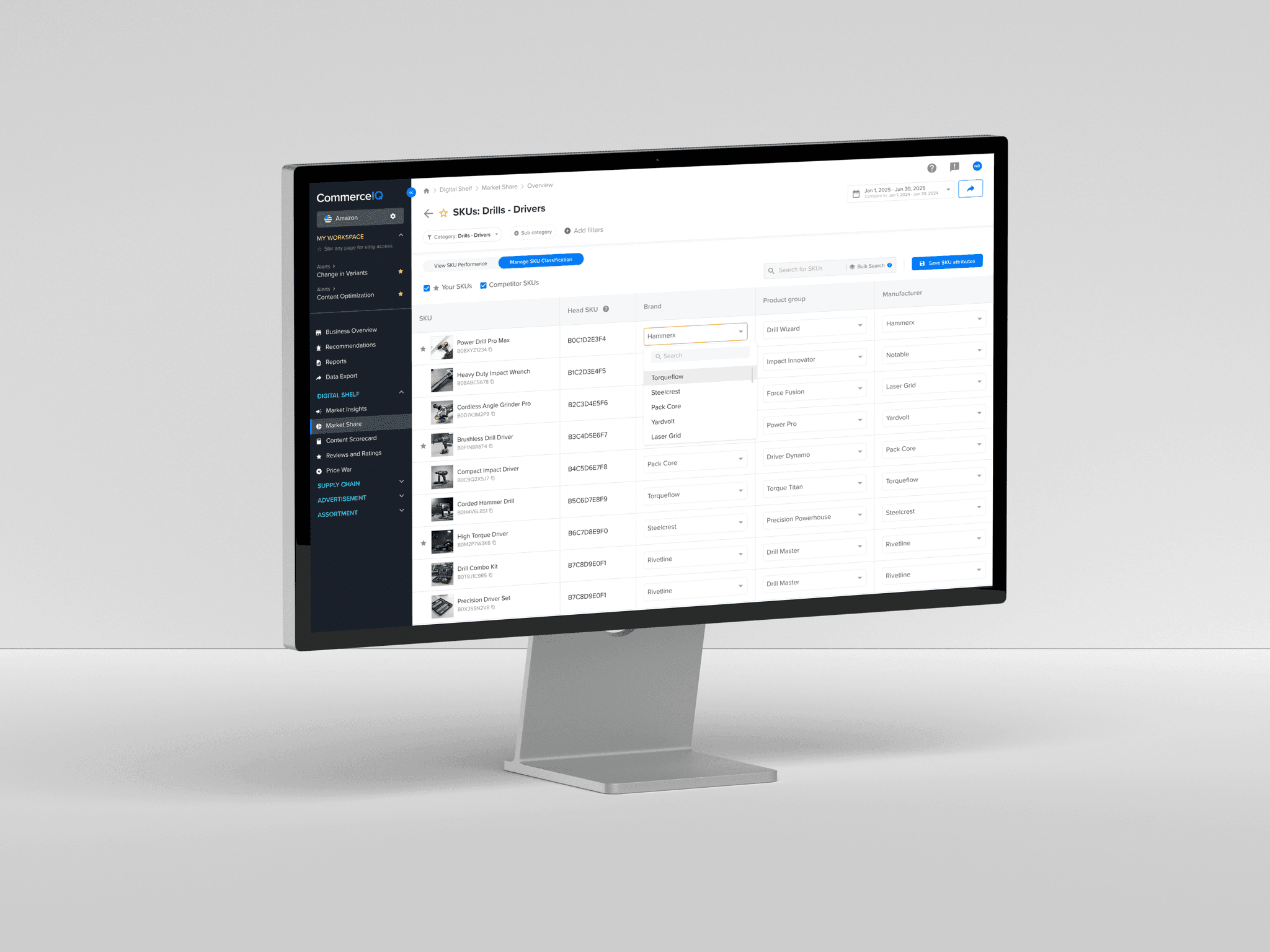
Align category and SKU classification so the same measurement holds across views.
Make movement easy to review (V1)
Show where market share changed across category, brand, and SKU drilldowns.
Add explanation where it’s needed (V2)
Introduce diagnostics that link market share movement to likely drivers like availability, promo, and visibility, with evidence close by.
Keep the same mental model (V2)
Extend V1 views instead of rebuilding the experience, so teams didn’t have to relearn Market Share.
Next
The key system decisions behind Market Share

SYSTEM
Inside the Market Share system
Market Share works as a connected review loop: trust the number, spot movement, understand why it moved, then decide next steps all in one place.
The system evolved without changing its core mental model.
How we built it in versions
VERSION 01
VERSION 02
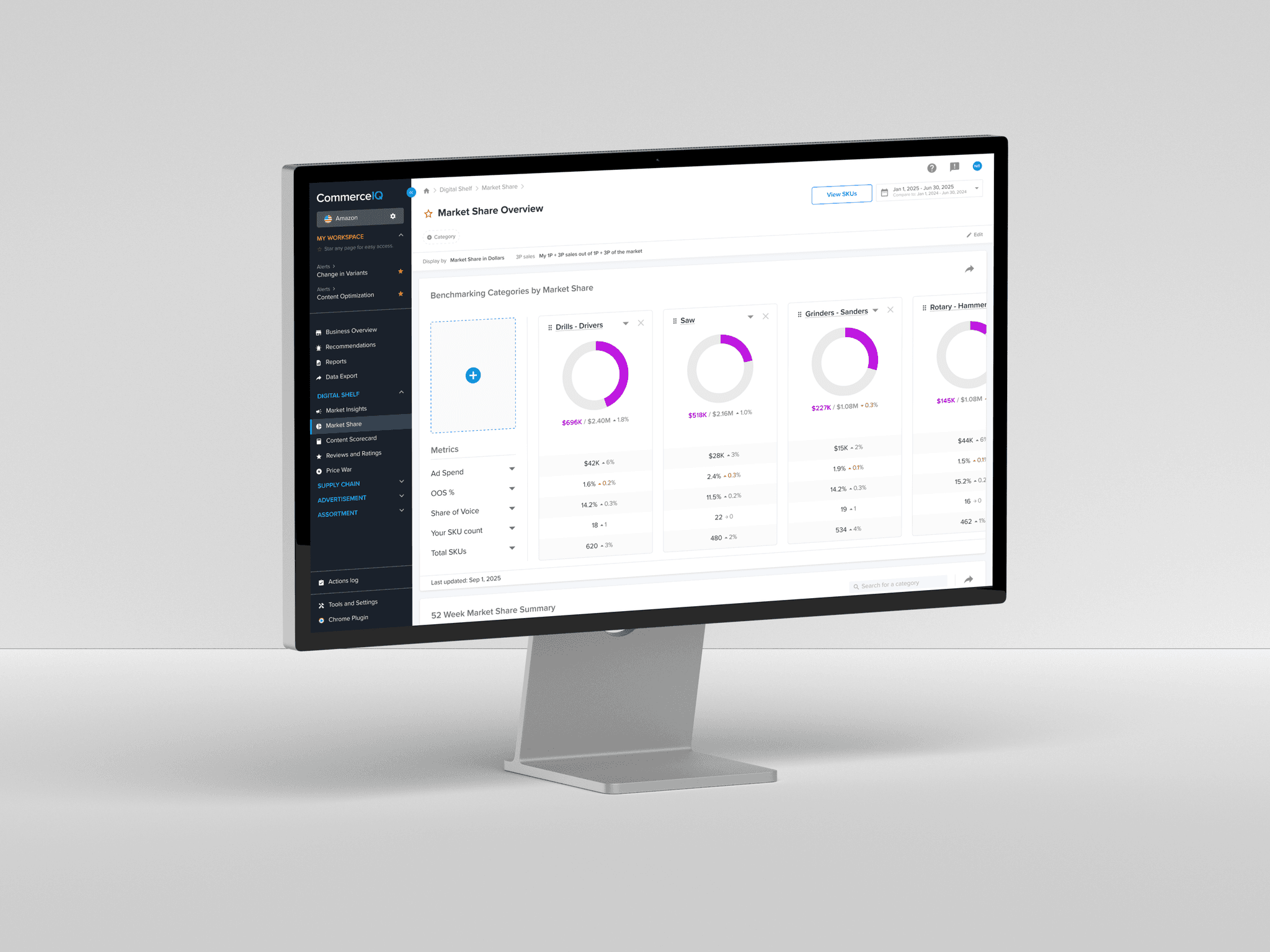
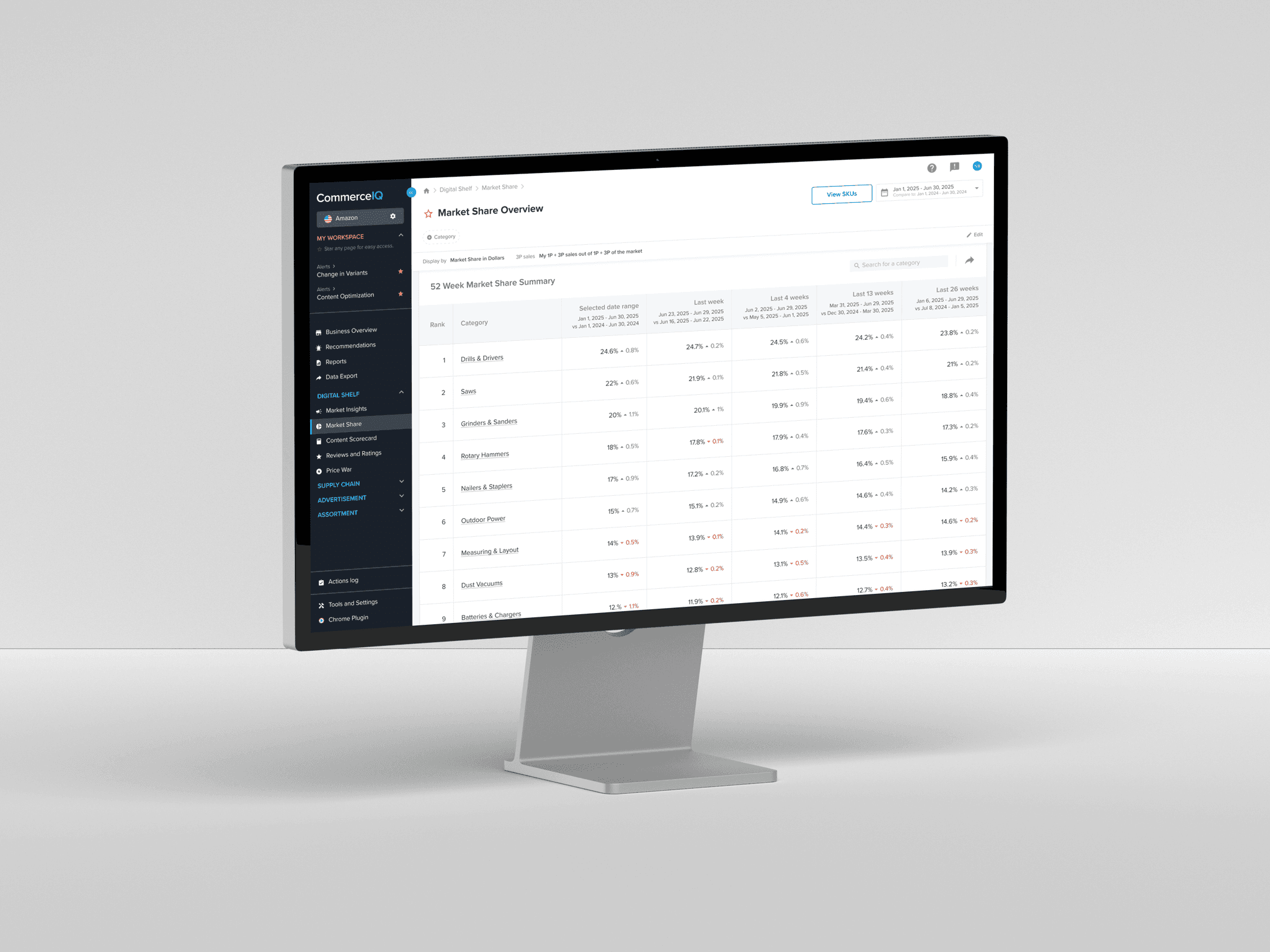
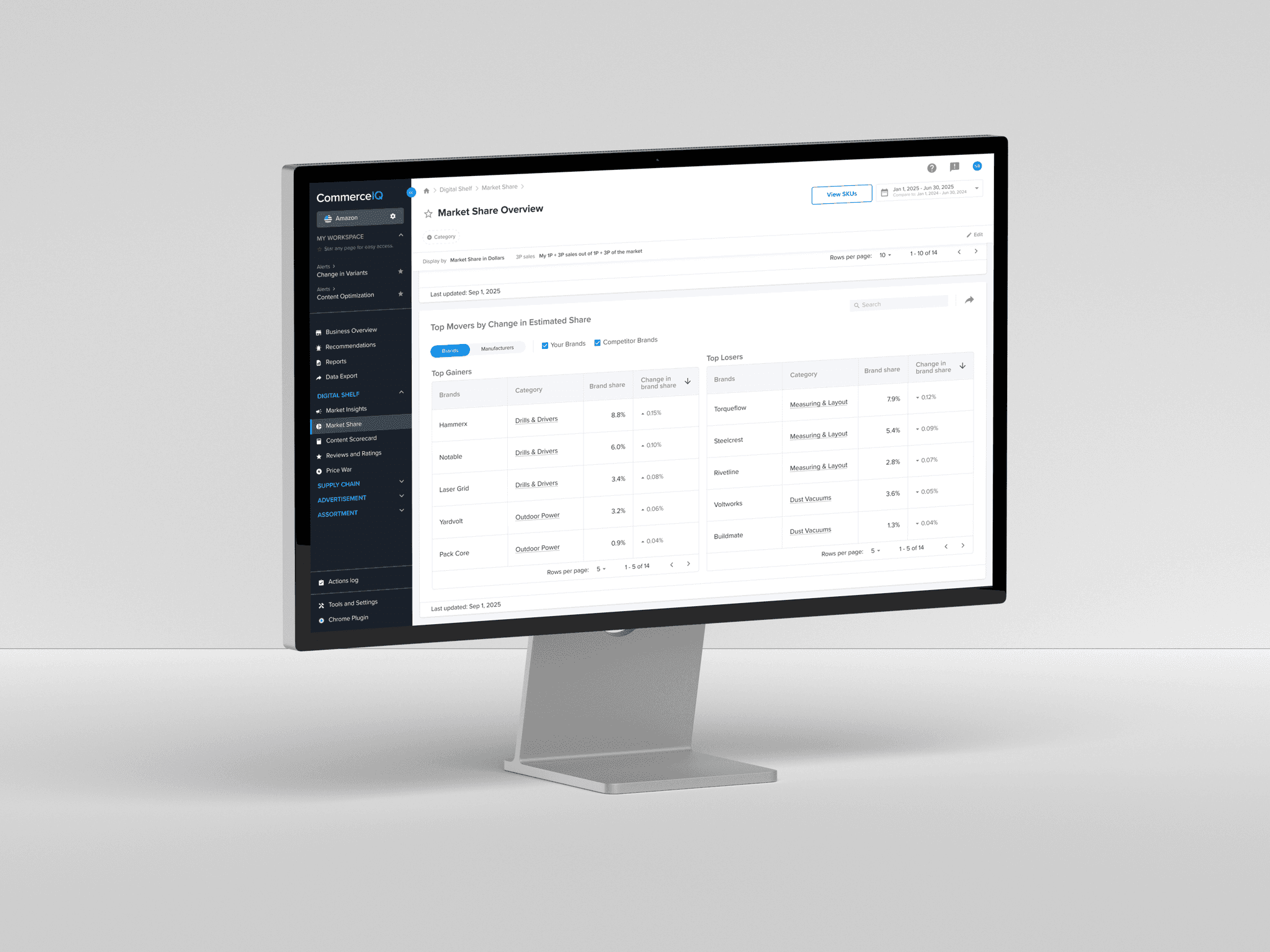
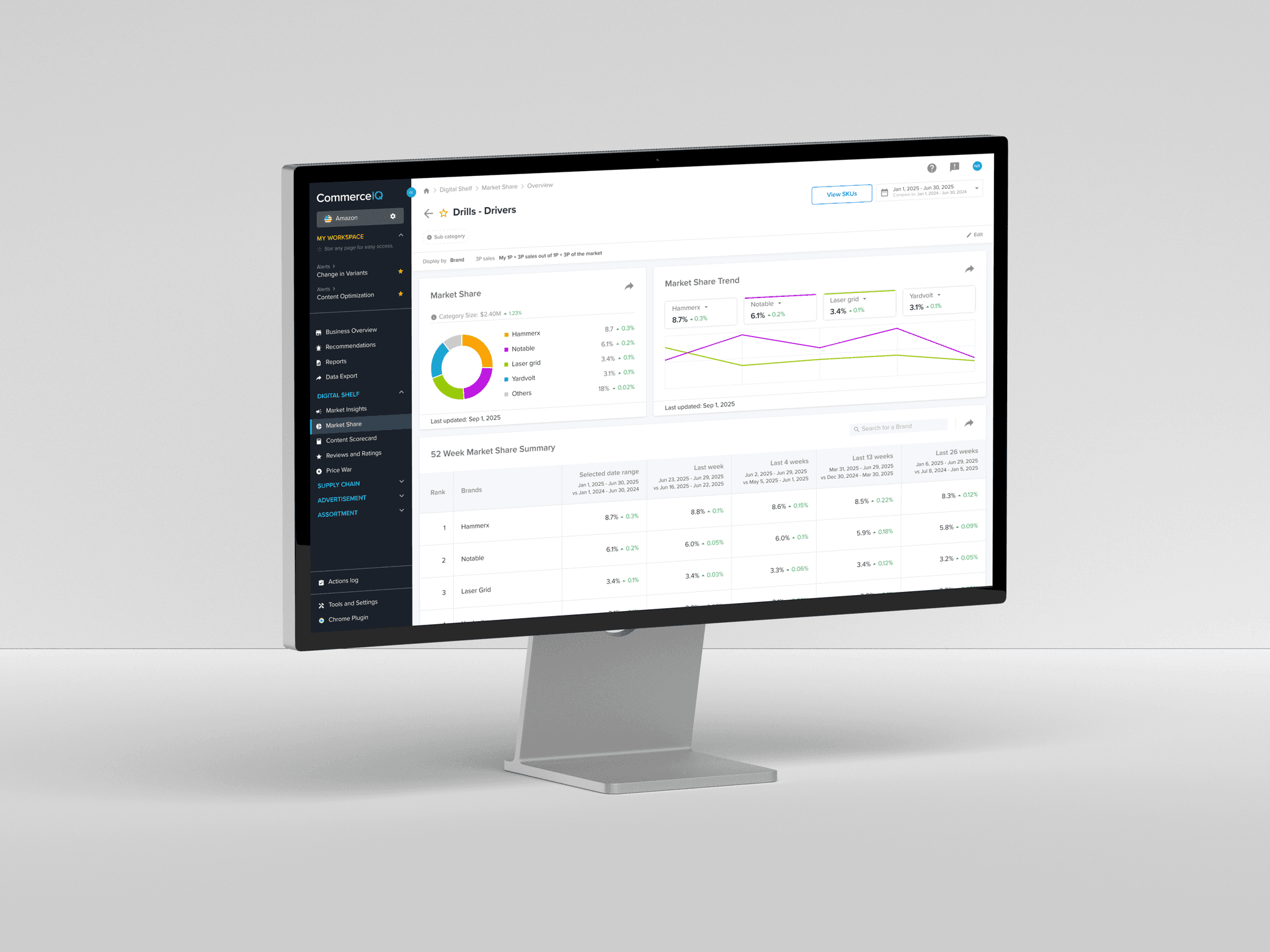
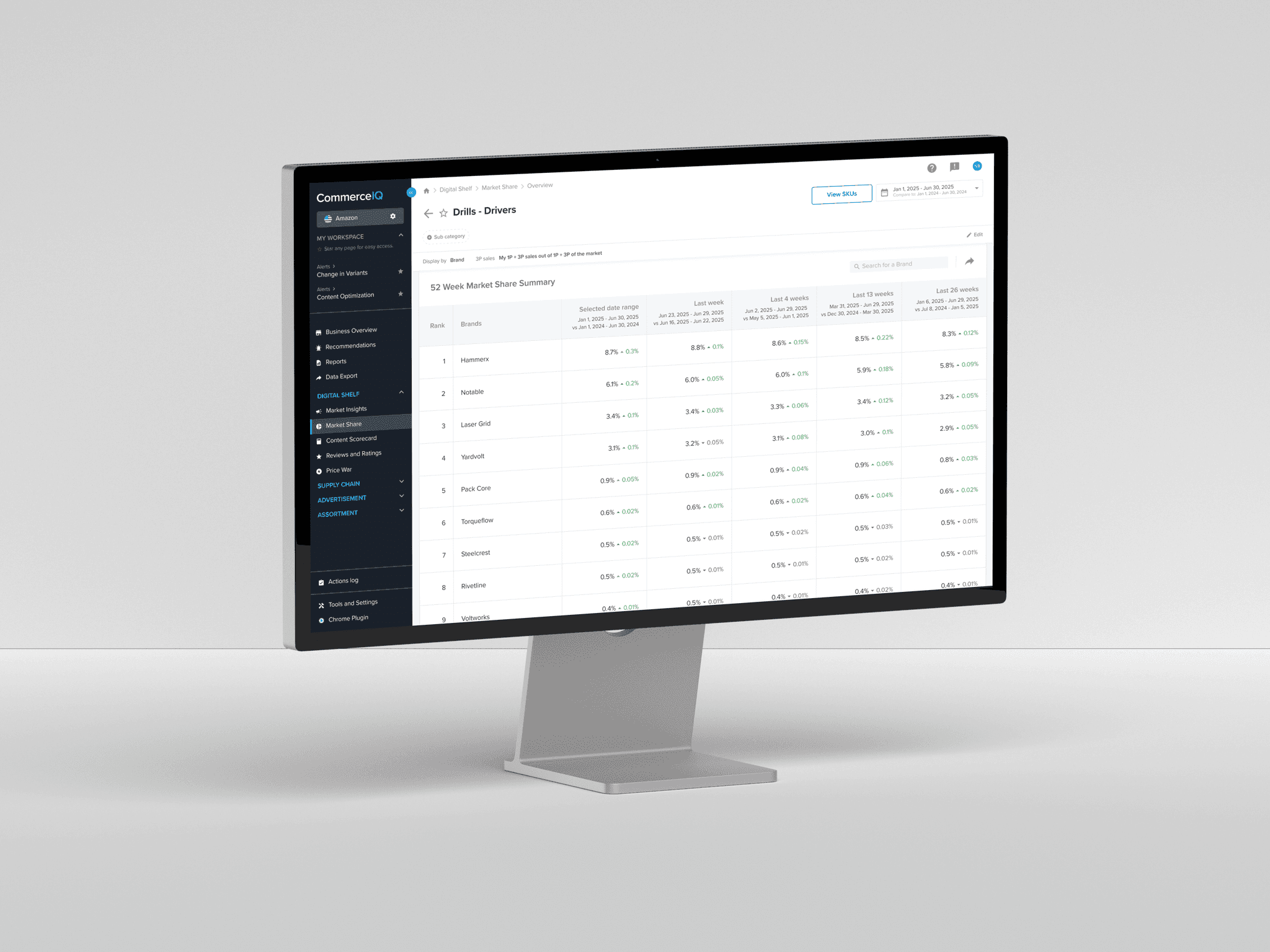
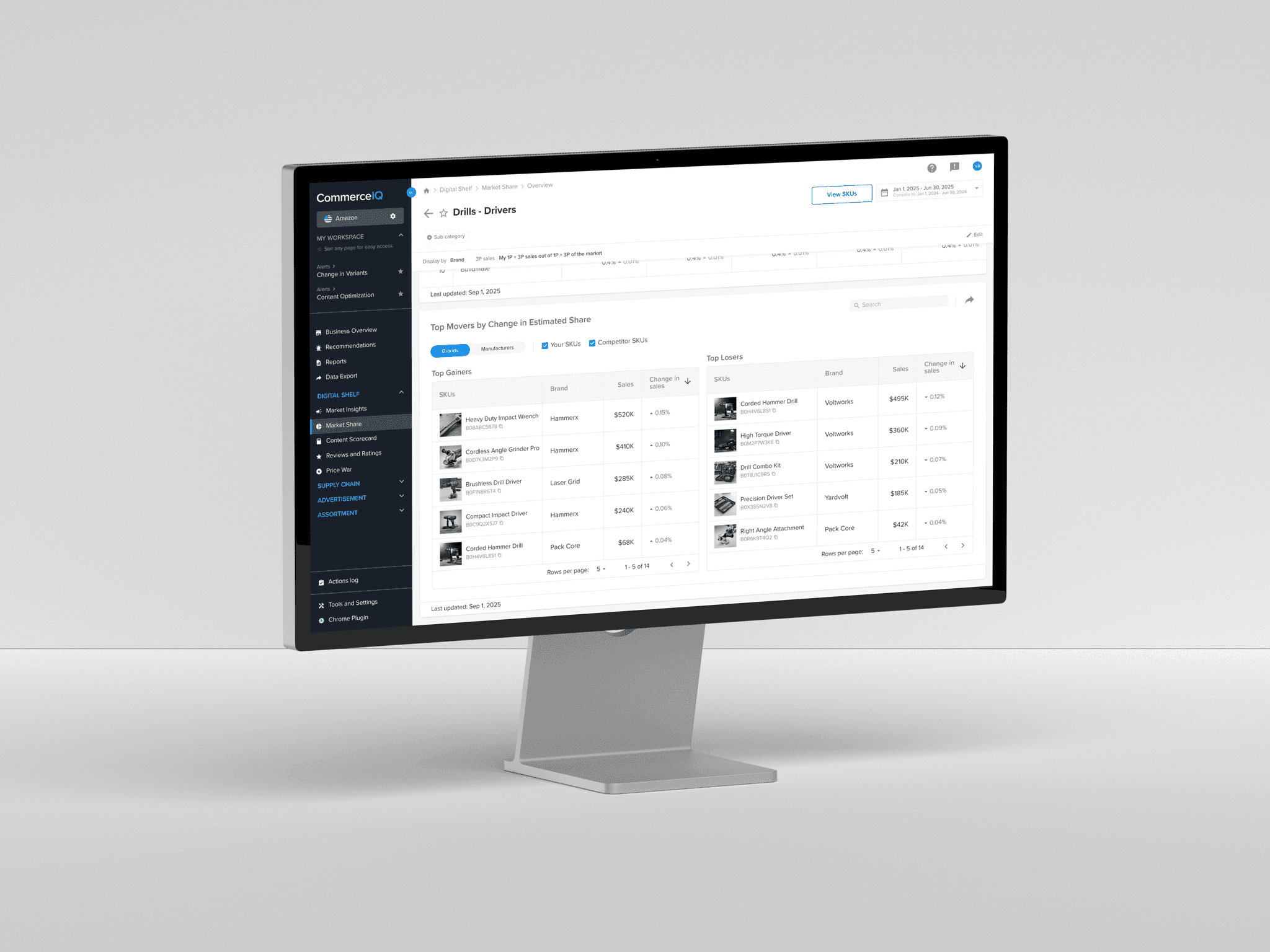
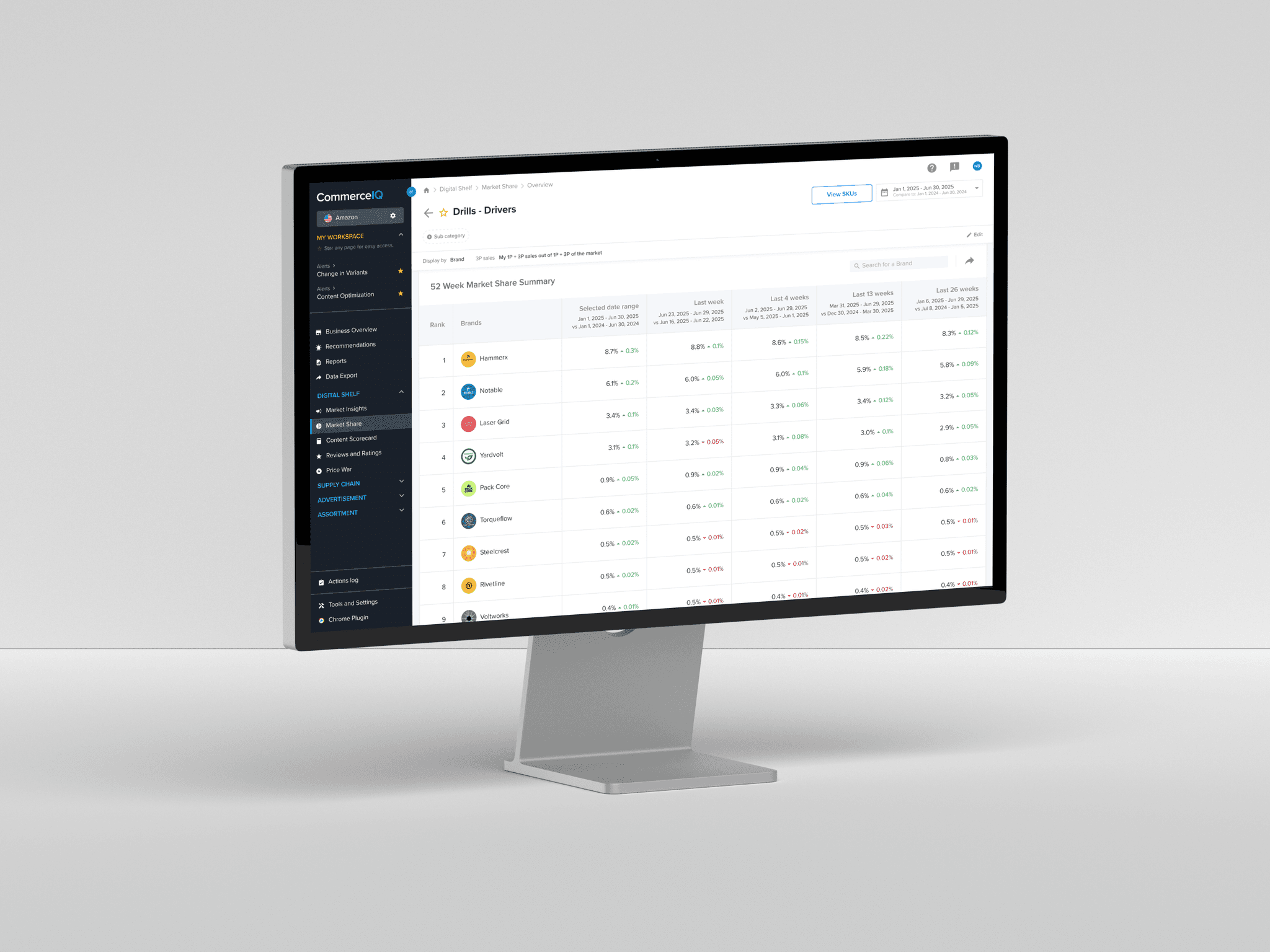
Measurement & trust
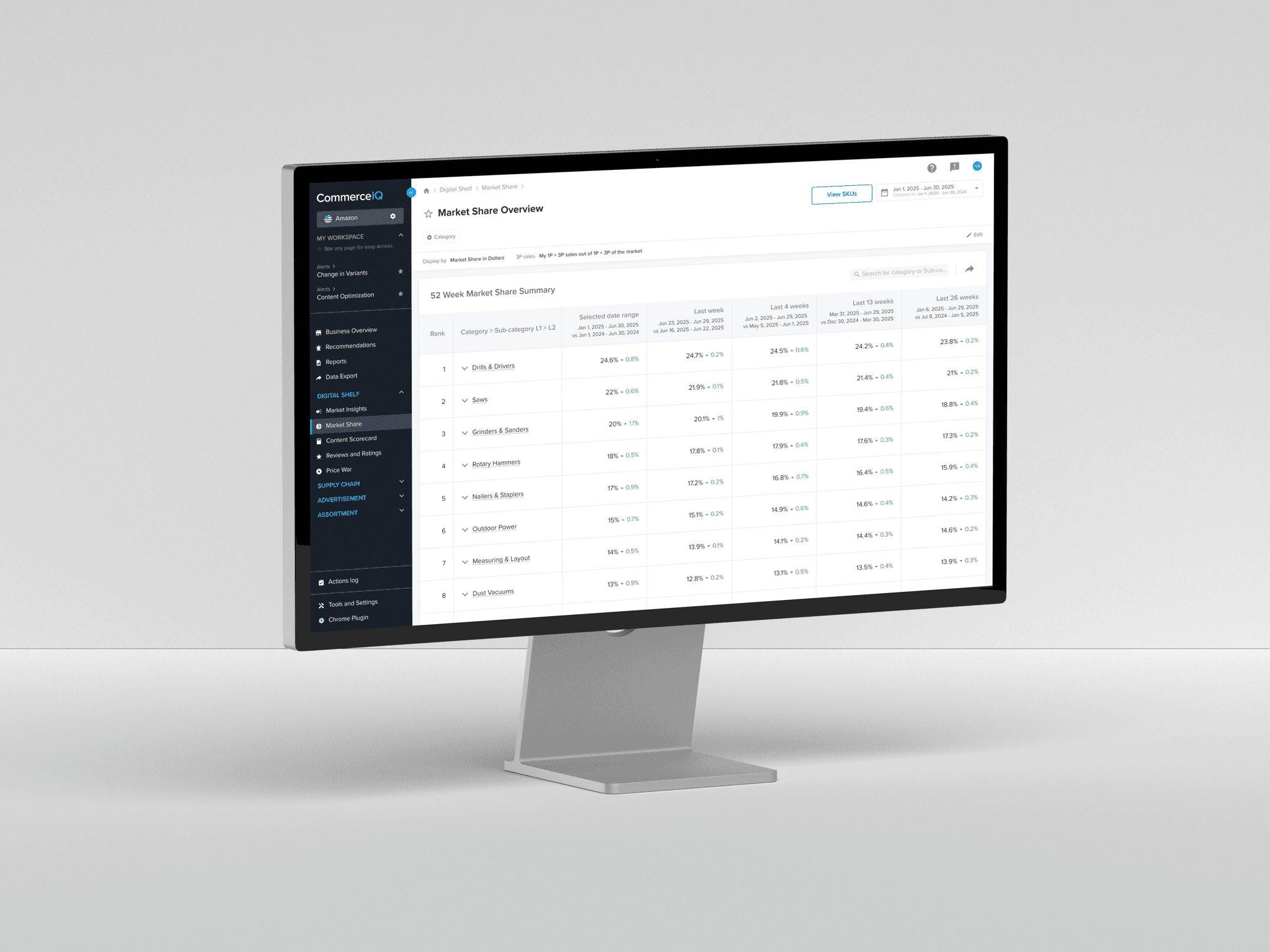
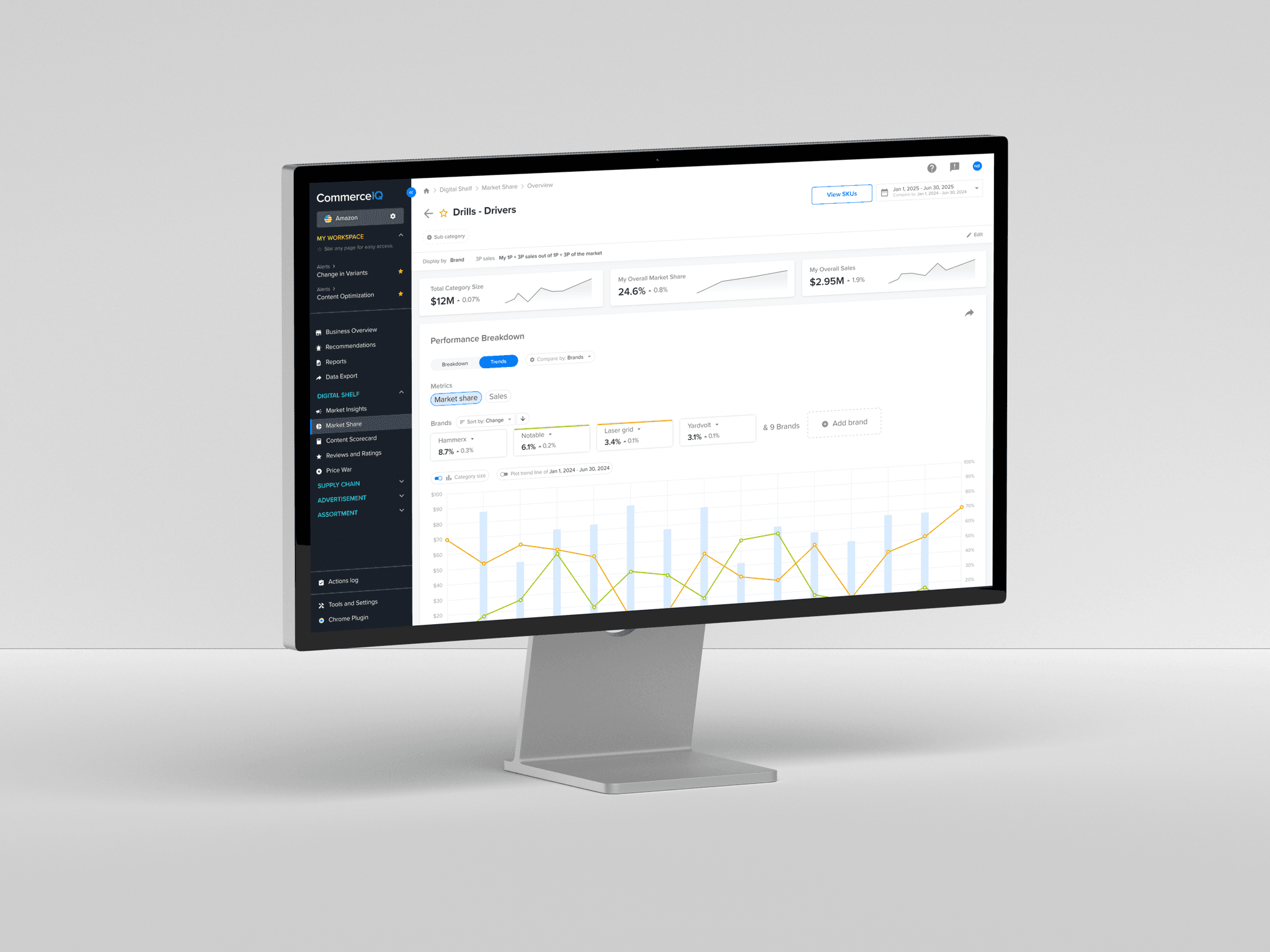
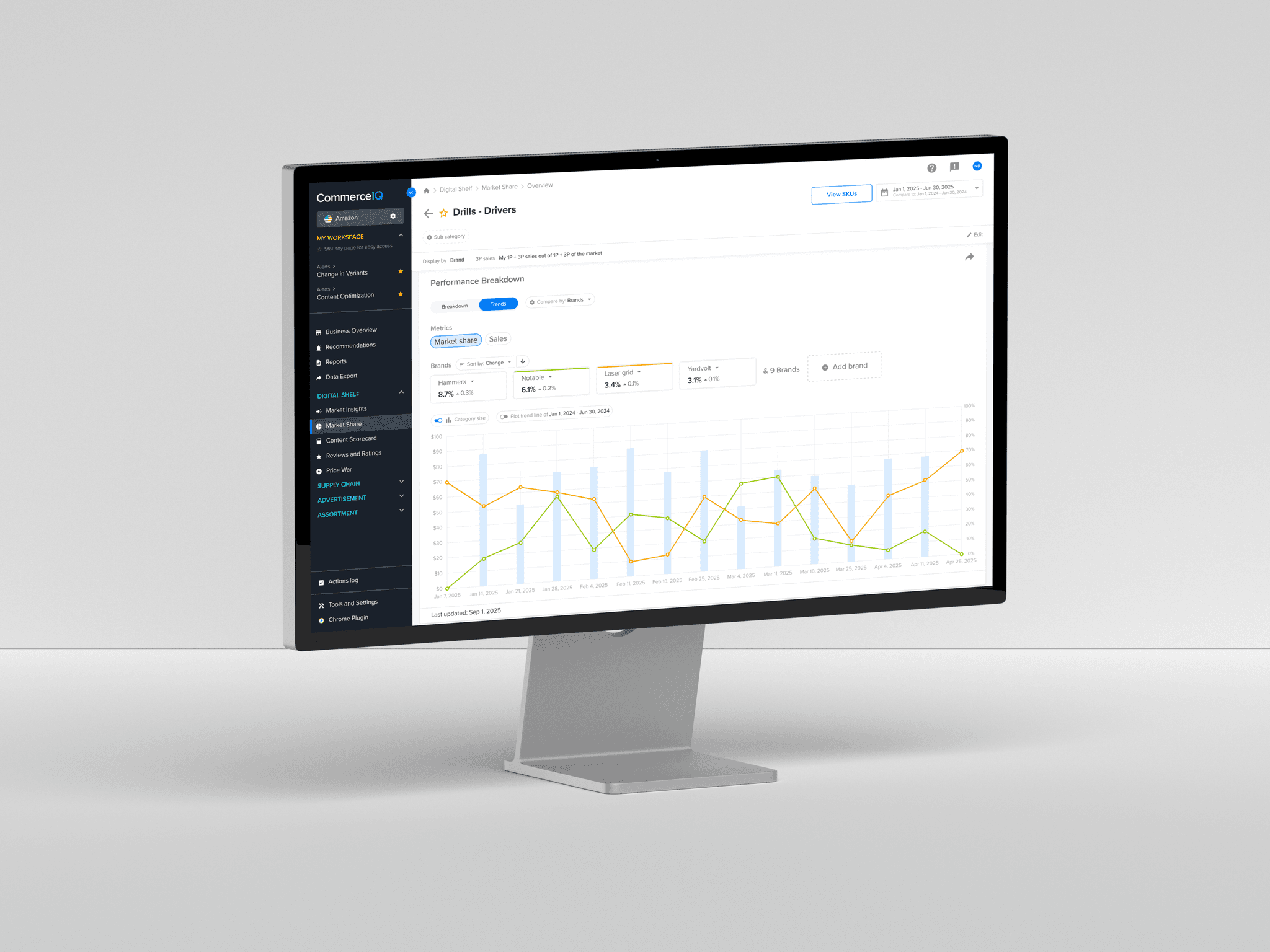
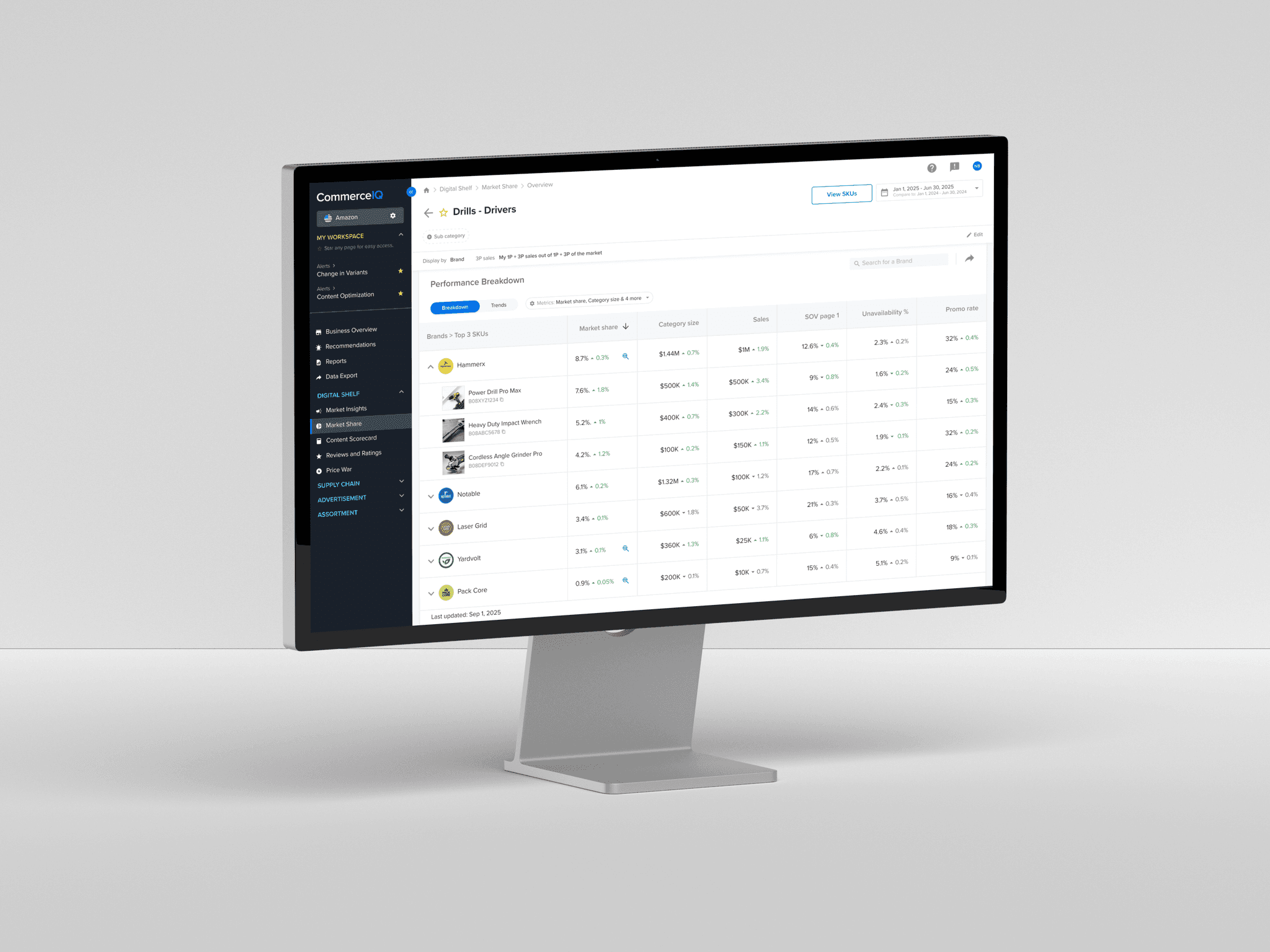
This version established a single market share number teams could rely on during reviews by locking category and SKU definitions and standardizing rollups.
What this unlocked
Comparable market share across categories and subcategories.
Review-ready trends and exportable tables.
Reduced manual prep during weekly and monthly reviews.
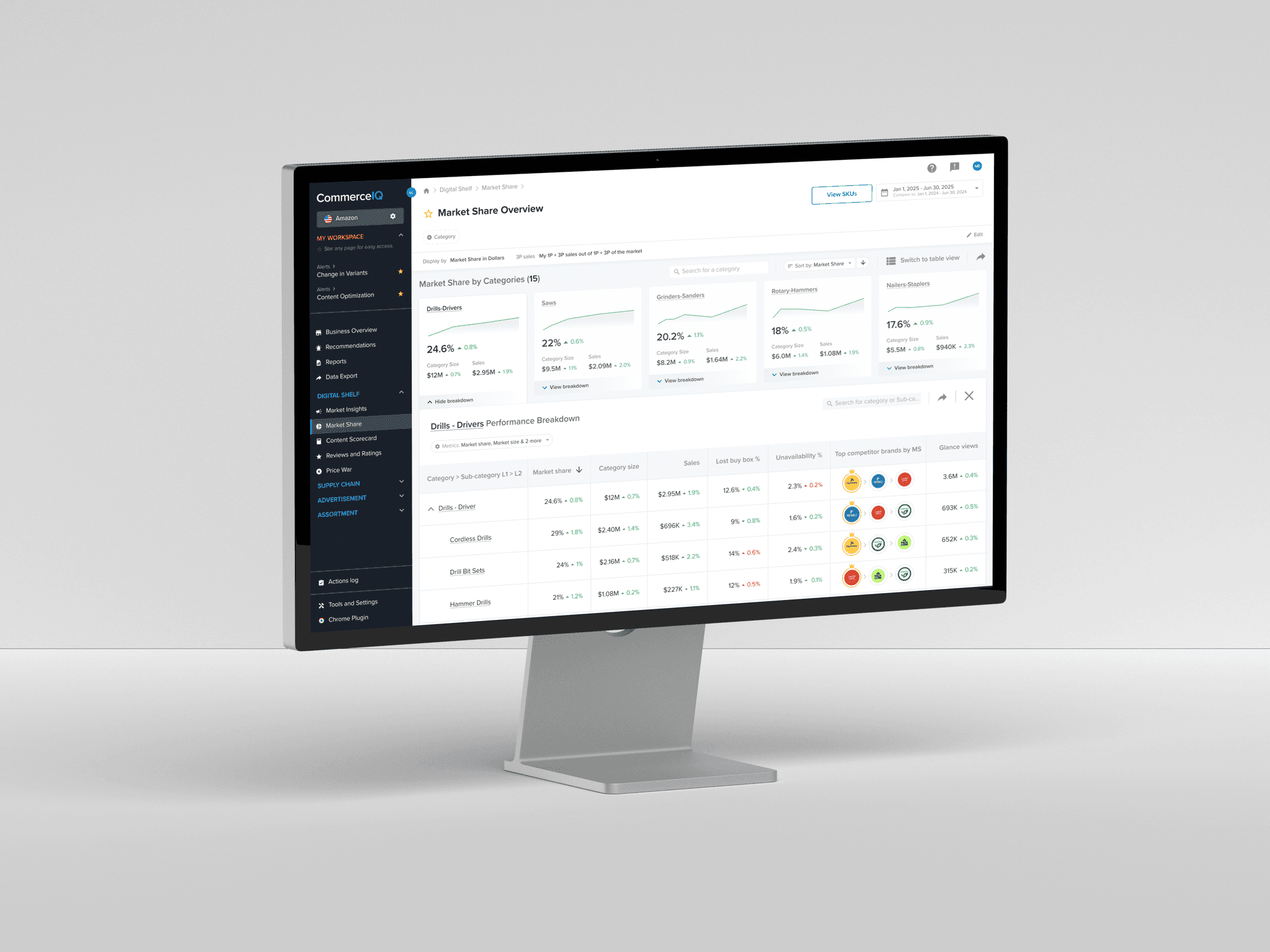
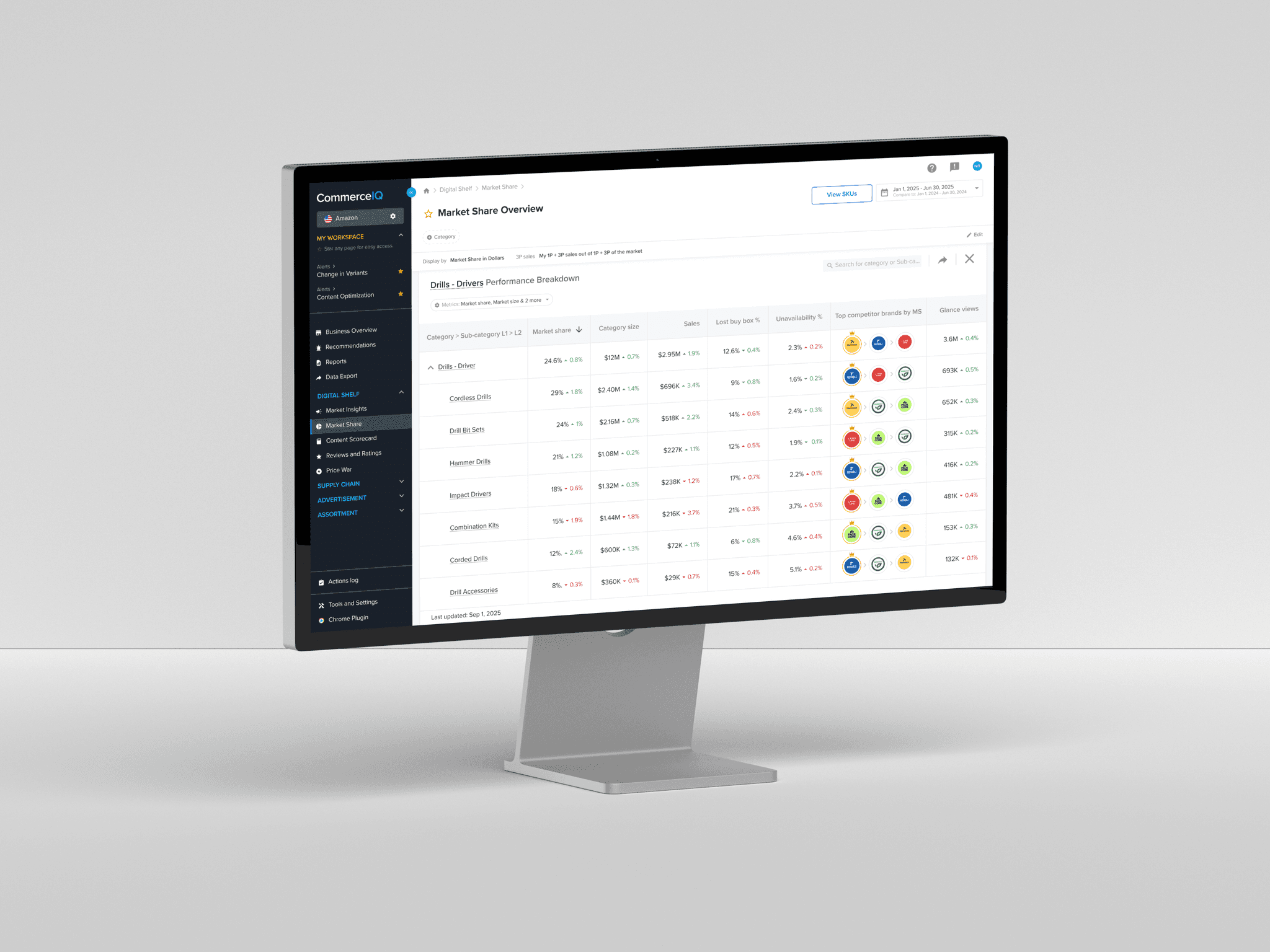
Explanation & Decision
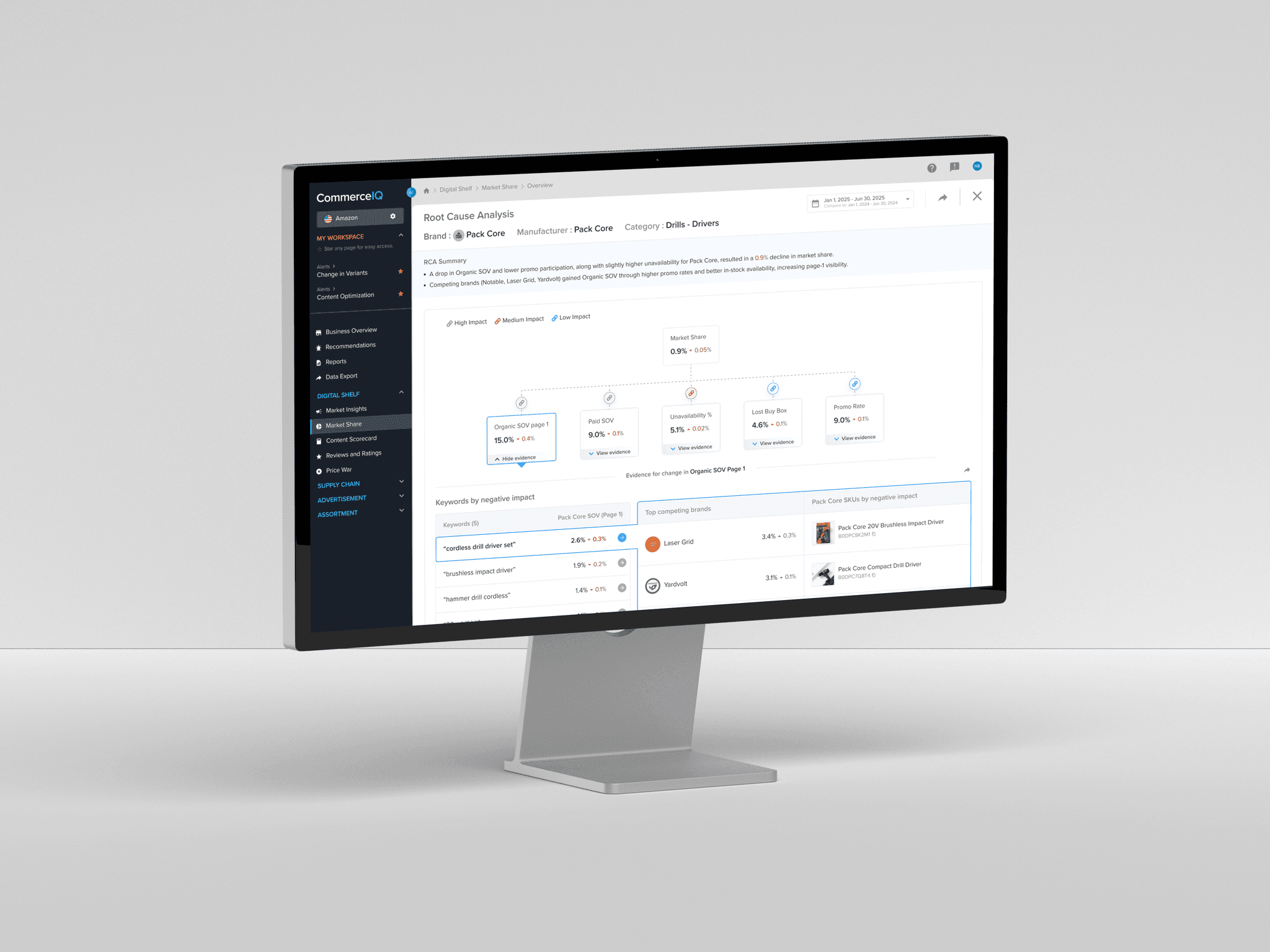
This version extended the same review flow to explain why market share moved, without changing how teams navigated or reviewed performance.
Purpose
Turn market share from a static metric into a decision-making system.
What this unlocked
Landing experience redesigned for scan-first category reviews.
Diagnostics connecting share shifts to likely drivers.
Deeper drill paths without disrupting existing workflows.
Next
What I owned vs what I guided across V1 and V2

MY ROLE
What I led, and where I supported
Led Market Share V1 end to end, establishing the measurement and review workflow teams relied on weekly. Supported the V2 expansion by guiding how diagnostics were added without breaking the core experience or mental model.
My contribution across Market Share V1 and V2
Experience
Market Share V1
Measurement foundation and core workflow
Overview landing and primary navigation
Category and SKU views with drilldowns
Weekly signals: top movers and summaries
Category and SKU classification model
Market Share V2
Diagnostics‑led expansion of core views
Embedding diagnostics into the same review flow
Preserving the mental model as depth increased
Owned
Guided
Next
Outcomes and adoption after launch

OUTCOMES
What changed after we shipped Market Share
Market Share turned a debated metric into a trusted weekly signal teams could act on and then evolved into a decision system without breaking review flow.
V1 Outcomes - Measurement & Trust
Time saved in reviews
2–3 hours
Minutes
No more reconciling category sizes, brand lists, or SKU coverage.
Measurement trust
1 aligned
market share number
Clear category and SKU definitions removed ambiguity.
Early adoption
272+ users
across 60 accounts
Demand for centralized market share was validated.
Usage pattern
Ad-hoc
Repeatable
Used in reviews, but not yet decision-driven.
Limits revealed
Trust without
explanation
Teams trusted the number, not the “why.”
V2 Outcomes - Adoption & Decisions
Weekly usage
Repeatable
Weekly
Market Share became the default review entry point.
Faster signals
Weeks
Days
Trends surfaced before topline impact.
Adoption scaled
821+ users
across 80 accounts
The core model held steady as depth increased.
Efficiency gains
80% reduction in
insight-gathering
Less manual prep and cross-tool analysis.
Business impact
15–20%
ARR contribution
Used in demos, upsells, and renewals.
“Once Market Share went live, weekly reviews stopped being about reconciling numbers and started being about decisions.”
What people noticed
Next
Screens and flows from V1 and V2

REFLECTION
How Market Share changed my approach to complex metrics
Market Share reinforced a simple lesson for me: A number only matters when people trust it, understand what changed, and can act on it in real reviews.
Designing this meant treating “% share” not as a static metric, but as a conversation that has to hold up under pressure.
Define the number
A metric works only when its scope is clear.
Make scope obvious (category definition, SKUs counted).
Keep it consistent so teams stop debating the base number.
Explain the change
Movement without explanation creates doubt.
Show where the shift came from, not just that it happened.
Connect movement to likely drivers teams already understand.
Make it review-ready
Insights fail if they don’t survive live reviews.
Defaults and drill behaviour matter more than depth.
The experience must work at speed, with stakeholders watching.
THANK_YOU